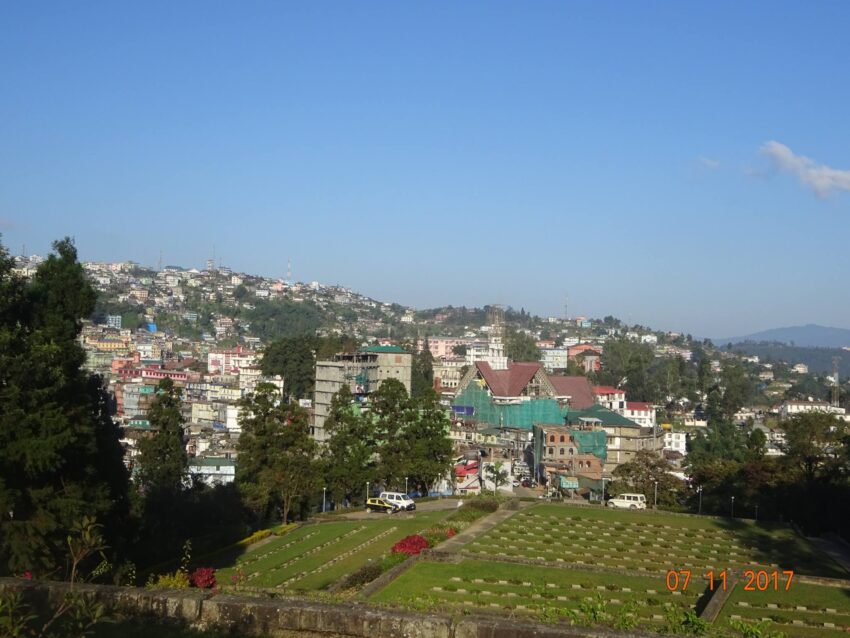
Kohima, Nagaland—so different from what I’d heard. Contrary to popular belief, it’s a peaceful state, home to 16 tribes, each with its own language, attire, musical instruments, and culture. Interestingly, the tribes don’t understand each other’s languages, so they use Nagamese—a fascinating blend of Assamese and Naga—to communicate.
There’s little infrastructure to speak of, but a new four-lane road is now being constructed up to Imphal. The locals are genuinely happy that, after 70 years, some development is finally happening and the government is paying attention to the Northeast.
Extremist activities have declined significantly, largely because locals have voluntarily stopped funding the groups. Ongoing negotiations between the central government and various factions are further paving the way for peace. There’s a sense of optimism in the air about these changes.
Missionaries have played a big role in raising the state’s literacy rate, but their influence has also led to the decline of tribal traditions and culture, now mostly showcased during festivals. The church holds considerable sway here, with banners in markets proclaiming Nagaland as a Christian state and encouraging people to set an example for “non-believers.” Despite this, the atmosphere remains very tolerant.
Improved roads and a boost in tourism could do wonders for curbing unemployment and strengthening the economies of not just Nagaland, but also Manipur and Mizoram. The Hornbill Festival, which celebrates local culture every December, is definitely a step in the right direction.
A visit to the World War II memorial, maintained by the Commonwealth, was a moving experience. It honors the Indian and British soldiers who fought here. It struck me that there’s no similar memorial for Netaji Subhash Chandra Bose’s army, which had the courage to fight against the British. It made me realize how little we honor our own heroes—even today, our tributes to the martyrs of our defense forces often feel like mere lip service.
Nagaland left me with much to reflect on—about culture, change, and the stories we choose to remember.