And then, there was Kumbh.
Honestly, I don’t really know why I decided to visit the Kumbh Mela this year. It was never on my list of places to see. Maybe the trigger was a comment from my building’s watchman, who is from UP. He said, “Aap duniya ghoomti ho. To Kumbh bhi jayiye.” (“You travel the world, so you must visit Kumbh too.”)
I went simply to see what it was all about. Unlike all my other trips, this visit had no itinerary or checklist. I arrived as an observer, with the only vague plan being to see the Sangam.
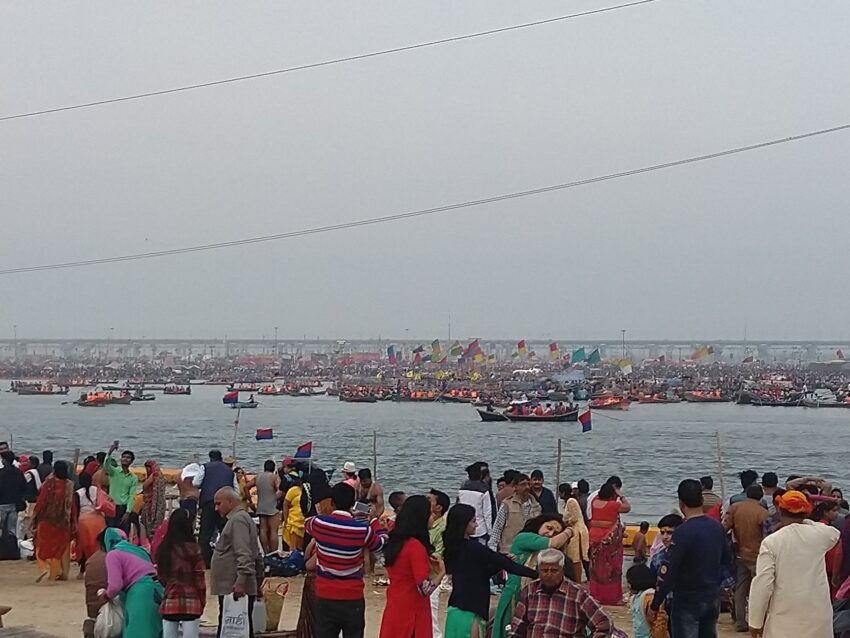
So, what was Kumbh all about? It was a vast mass of humanity—people from every economic background, caste, creed, and gender—walking towards the Sangam, many for miles, with joy and unwavering faith, just to take a dip in the holy rivers. Boats deftly navigated the traffic jams on the water. All barriers—caste, state, language, economic status, gender—seemed to dissolve at the Sangam. Centuries-old traditions and culture were being kept alive by pure faith. People from every corner of the country shared a profound sense of oneness. This, I realized, is what India is all about.
Though I had no intention of taking a dip, I ended up doing exactly that—twice in a row, once on the holy day of Mahashivaratri. In that moment, I felt one with the rivers. I lost all sense of the crowd around me; it was just me and the water. Looking around, I realized that most people were experiencing the same thing—each lost in their own world, not really caring what others were doing. Despite the crowds, there was a surreal sense of peace and calm everywhere.
Since I visited during the final phase of the mela, I didn’t have the chance to meet the saints, and many cultural events had already wrapped up. That’s a big reason to visit the next Kumbh! Hats off to the organizers, the UP Government, and the UP Police for the fabulous arrangements. I read that in the last 122 years, this was the first Kumbh without any accidents, and the number of visitors was a mind-boggling 240 million!